When Your Own Mind Becomes the Hardest Place to Be
10 Daily Habits That Helped My Mental Health — these habits slowly, over the years, taught me how to stand on my own side, even when my own mind was the hardest place to be. Mental health has shaped so much of my journey, and these habits slowly taught me how to feel safer and more grounded in my own mind.
There’s a kind of tiredness that a long sleep or a free weekend can’t fix. When you’re physically present in your life, but feel completely depleted on the inside. When the simplest things — grocery shopping, a phone call, or even just stepping out the door — feel enormous.
I know this feeling exactly. Not just in theory.
How Surviving Became Self-Care
My generalized anxiety didn’t develop overnight. It took many things — years, layers, wounds.
From childhood, I received messages — spoken and unspoken — that slowly shaped the way I saw myself. Then came the years of school bullying. Not once, not randomly — but for a long time, repeatedly, during a period when you’re still figuring out who you even are.
Those years deeply shaped how I functioned in the world. I couldn’t set boundaries. I couldn’t say no. I didn’t know what I liked, what was good for me — because I had grown so accustomed to adjusting to others’ expectations. Because of this, people took advantage of me often. I constantly sought validation from others, because I didn’t feel worthy from within.
Years later, these unprocessed burdens began to manifest physically. My generalized anxiety developed — with persistent physical symptoms that made even the most ordinary days difficult. There were times when agoraphobia crept in too — when the world simply felt too big and too dangerous to step into.
I take medication, I go to therapy — and I’m no longer ashamed to say it. These are just as much a part of my life as my morning coffee, my journal, or my skincare ritual.
I’m 26, and I’ve spent much of the past ten years on a journey of self-discovery. I’m not writing because I have all the answers. I’m writing because I know what it feels like to get lost inside your own mind — and I also know that there is a slower, gentler way out.
1. Movement Is Not a Punishment — It’s Nervous System Support
Supporting my mental health started with understanding that movement isn’t about changing my body — it’s about calming my nervous system.
For a long time, I believed that exercise was only for people who wanted to lose weight. For me, this was a particularly complicated topic — I was unhealthily thin for many years, and I lived with the misconception that movement only leads to weight loss. And I absolutely did not want to lose any more weight. So I simply ruled it out of my life.
Then, gradually, I realized that movement has nothing to do with body weight — or at least, that’s not its only purpose. Research shows that regular physical activity reduces anxiety and depression while increasing serotonin and dopamine levels. But honestly, the science wasn’t my most powerful proof. It was the moment when, on a particularly hard day, I went for a short walk anyway — and twenty minutes later, I felt less trapped inside my own head.
Hiking in nature means especially a lot to me. There’s something healing about being surrounded by silence, hearing only the air and your own footsteps. You don’t need a perfect workout plan. Sometimes a slow walk is enough.

2. Sleep Is One of the Most Important — and Most Overlooked — Mental Health Habits
One of the hardest parts of anxiety for me was that my brain simply wouldn’t switch off at night. Thoughts would race, and I often couldn’t fall asleep for hours. The consequence was that during the day I was completely mentally exhausted — there were times I had to sleep in the afternoons just to get through the day. Not out of laziness. But because my body and mind simply needed it.
Quality sleep reduces stress, improves emotional regulation, and supports nervous system recovery. My evening routine is slower now: dimmer lights, less screen time, skincare, gentle music or reading. Not every evening is perfect. But I no longer want to constantly push myself past my limits.
3. Mindfulness Helped Me Be Present Again — and Ease Physical Symptoms Too
Anxiety keeps you in the future constantly. What if…? What will happen if…? My mind manufactured endless scenarios — and my body responded to them.
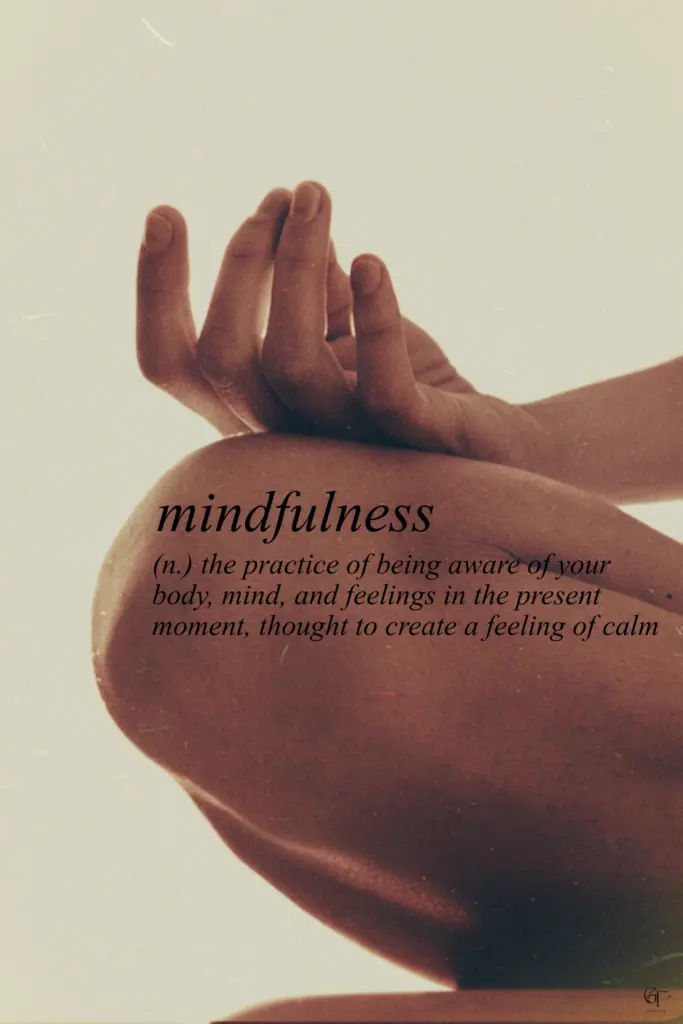
Mindfulness doesn’t mean I’m always calm. It means I’ve learned to bring myself back to the present moment — out of my head and back to my breath. And this doesn’t just help mentally; it’s also capable of easing physical symptoms. I still actively use this today, and it works.
At first, it was very hard. Anxious people are often most afraid of silence — when there’s no noise, your own thoughts get louder. But with time and practice, it becomes almost automatic. You no longer have to fight it so hard — you simply do it.
Sometimes this just means noticing my breath. Drinking my morning coffee more slowly. Not reaching for my phone right away. It’s enough to just be present — you don’t have to do it “right.”
Mindfulness became one of the most powerful tools for my mental health, especially on days when my thoughts felt overwhelming.
4. A Morning Routine Changed My Entire Days
I truly believe mornings have power.
Before, I started my days rushing — the first thing I’d do was reach for my phone, followed by stress, hurrying, too many stimuli at once.
Now my mornings are quieter. My skincare routine has become much more than simple skincare. It became a small act of care directed toward myself — a signal that I deserve attention and gentleness, even on days that don’t promise to be easy. This was especially important for me, someone who spent so long trying to find self-worth in other people’s validation.
Coffee, journaling, a short walk or stretch. These seem like small things — but life is built from small things.
If you’re curious about my soft morning routine, you can read all about it in my earlier article.
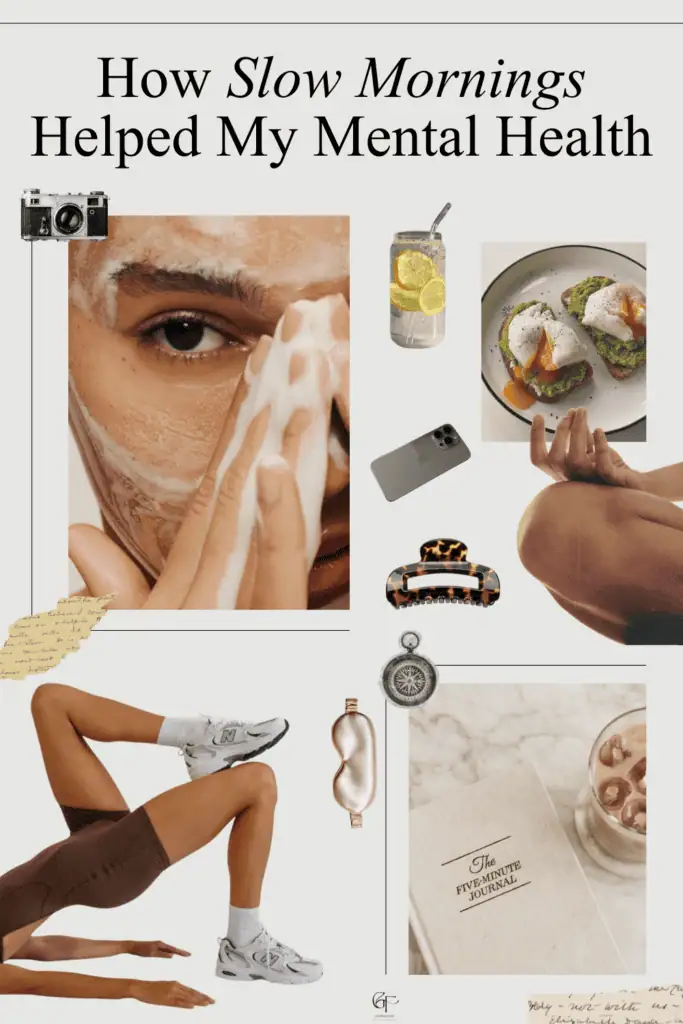
Creating a slower morning routine changed my mental health more than I expected — it gave me a sense of stability I had never felt before.
5. Nature Is Not a Hobby for Me — It’s Therapy
When there’s too much noise in my head, I always turn back to nature.
A hike, a walk through the forest, or even just a few minutes in fresh air can bring me into a completely different state. Nature somehow reminds me that I don’t always have to rush. That slowness exists, rhythm exists, silence exists.
Research confirms that time spent in nature reduces stress hormones, improves mood, and calms the nervous system. For me, it carries a more personal meaning: in nature, I feel most reconnected to myself. There, I don’t have to perform for anyone. There, I’m enough just as I am.
Nature has always been a place where my mental health feels supported, grounded, and less chaotic.
6. I Learned That I Don’t Have to Carry Everything Alone
This was perhaps the hardest lesson — because for a long time, this was my default setting.
Someone who didn’t learn in childhood that it’s safe to ask for help, that their boundaries matter, that their needs are valid — carries this into adulthood. That was me. I couldn’t say no. I didn’t ask for help. I swallowed everything instead, and then wondered why I constantly felt exhausted and worthless.
Therapy slowly, patiently rewrote this in me.
Asking for help is not weakness. Setting boundaries is not selfishness. Now I’m much more intentional about making time for the people I love, connecting with real people, and not completely withdrawing during harder periods.
One of the most powerful healing feelings is realizing you’re not alone in this.

7. Journaling Helped Me Understand Myself — But the Beginning Wasn’t Easy
Journaling is now an integral part of my life. But honestly? At the beginning, it was very hard to make myself sit down and write at all.
It was as though I couldn’t put into words what was in my head. I was too focused on formulating things well, on writing clear sentences, on the whole thing being somehow coherent and logical. And of course it was never “good enough” — so I just didn’t do it.
Then I realized that journaling has nothing to do with perfection. In fact, that’s the whole point — to write out whatever is in your head. Even if it’s fragmented. Even if it’s inconsistent. Even if it’s just half a sentence. The overall picture doesn’t need to be neat — what matters is that it comes out of you.
Since then, journaling has helped me recognize what patterns repeat in me. What triggers my anxiety. What I actually need. When I’m overwhelmed — and when I’m genuinely doing well.
Sometimes I write just a few sentences. Sometimes pages. But it always brings me closer to myself.
Research from the American Psychological Association shows that reflective writing and journaling can significantly support mental health and emotional processing.
8. Reducing Screen Time — The Habit Whose Effect I Felt Immediately
This is the habit where I felt the impact quickly and clearly.
Not abstractly — but concretely: when I don’t scroll through social media, I feel calmer. When I’m not watching other people’s lives, I stop comparing myself. I don’t feel like I’ve fallen behind, that everyone else is happier, more successful, further ahead. This kind of comparison — especially for someone who already doesn’t feel worthy enough — can be deeply destructive.
When I focus on myself instead of watching other people’s lives, my entire internal dialogue becomes quieter.
In practice: set a daily time limit on every app where you tend to fall into endless scrolling. But don’t immediately cut down to just half an hour — that rarely works long-term. Go gradually: if you currently spend two hours a day on social media, first bring it down to an hour and a half. Then to one hour. Gradual change is sustainable; sudden drastic restriction usually isn’t.
9. I Also Had to Learn to Listen to My Body’s Signals
For a long time, I treated physical and mental health as completely separate things. But the two are deeply connected — anxiety taught me this better than anything else.
When I didn’t eat properly, didn’t drink enough water, or completely exhausted myself, my anxiety also became much stronger. My body was always sending signals — I just wasn’t listening for a long time.
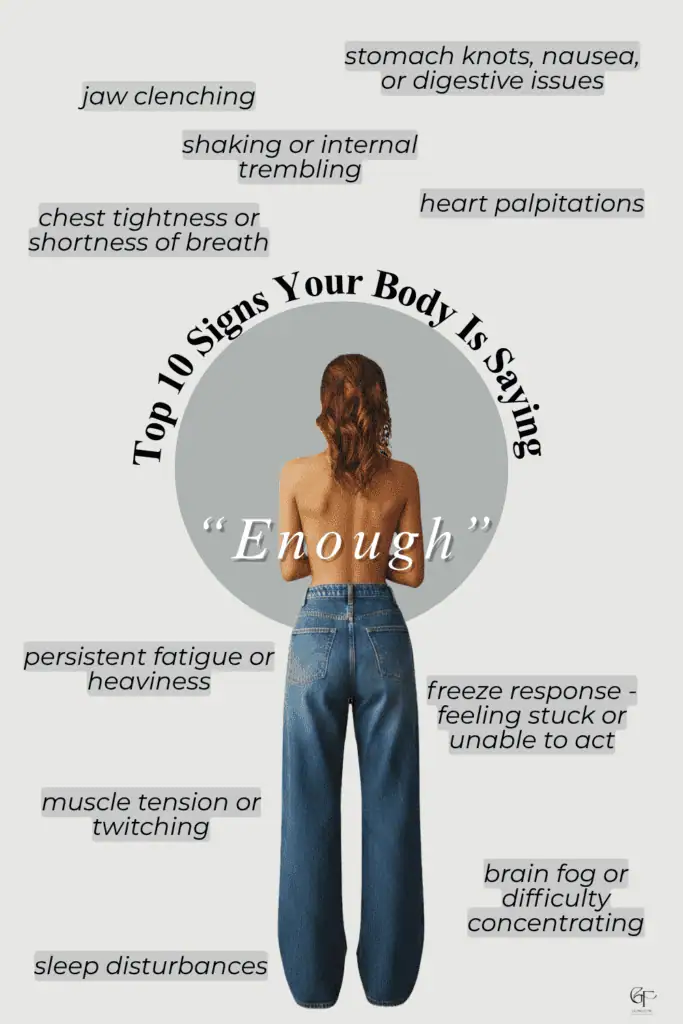
Now I try to pay more attention: regular meals, more water, nourishing food, a slower pace. Not perfectly. Just more consciously.
10. I Learned to Slow Down — and This Was the Hardest Thing
The world today demands constant productivity. But for someone living with anxiety, this is a particularly cruel expectation — because the anxious mind is already constantly “working.” Monitoring, analyzing, staying on alert.
I had to learn that rest is not laziness. Slowness is not failure. That I don’t have to optimize everything, justify every day, extract something from every moment.
There are days when I intentionally don’t want to achieve anything. Just exist.
And strangely, it’s in exactly these moments that I feel most human — and most like myself.
Quick Overview – 10 Habits That Have Genuinely Helped for My Mental Health
- Move a little every day — not for weight loss, but for your nervous system
- Treat sleep as a priority
- Practice mindfulness — it’s hard at first, but becomes automatic over time
- Build a slower, more nurturing morning routine
- Spend time in nature
- Connect with real people and ask for help when you need it
- Journal — imperfectly, honestly
- Gradually reduce your screen time
- Listen to your body’s signals
- Allow yourself rest and slowness
Closing Thoughts
Mental health is no longer a destination for me. Not the point where “nothing is wrong anymore.”
Anxiety is still part of my life. Hard days still happen. But I no longer feel like it completely controls me — and I no longer feel like something is fundamentally wrong with me. I’ve learned that my past explains things, but doesn’t define me. That my worth doesn’t depend on other people’s validation. That setting boundaries is allowed — necessary, even.
These habits didn’t fix everything overnight, but they became the foundation of my mental health and helped me rebuild myself gently, step by step.
Step by step, I’ve learned to become my own ally.
You don’t have to be perfect to start feeling better.
I’m Glad You’re Here
If you’d like to read more honest content about anxiety, slow living, journaling, and mental wellbeing, stay with me here in the world of Glow & Flow.