There was a time when I thought a beautiful life was something that happened later. This was the moment I first realized that romanticizing your life isn’t about perfection — it’s about noticing what’s already here.
When I would be healed enough. Brave enough. Productive enough. When anxiety would loosen its grip, when life would feel lighter, when I would finally arrive somewhere calmer.
But somewhere along the way, I started suspecting that maybe life wasn’t waiting for me on the other side of becoming “better.”
Maybe it was already here — in quieter forms.
In morning light falling across the kitchen counter.
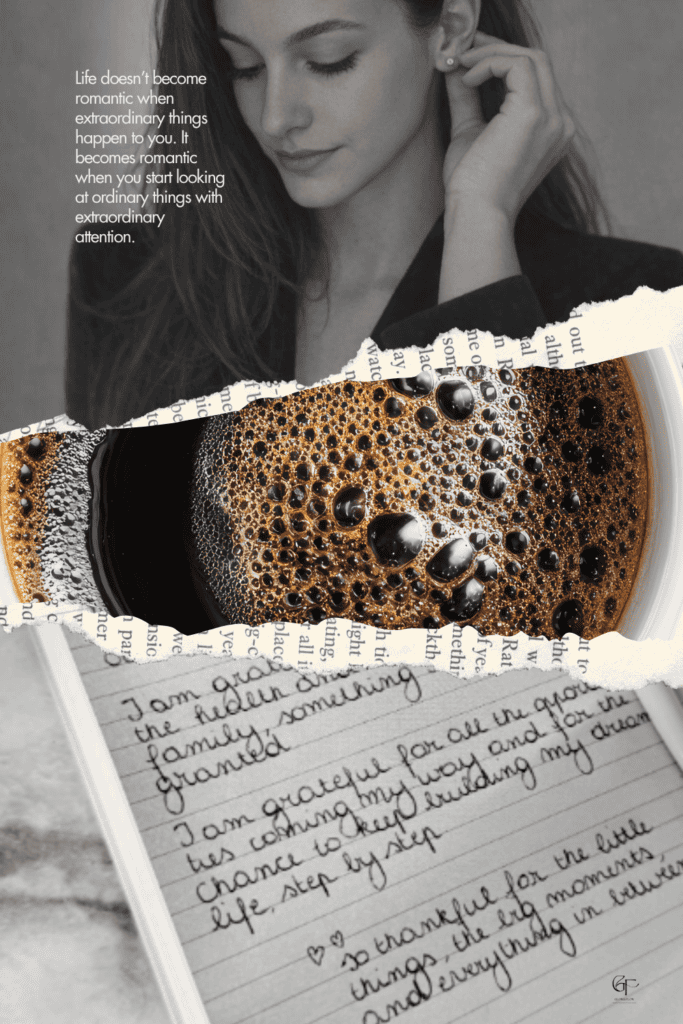
In the first sip of coffee before checking my phone.
In buying myself flowers for no reason.
And slowly, almost accidentally, I began romanticizing my life.
Not in the glossy, aesthetic sense people often mean online.
But in the softer sense — learning to treat ordinary life as something worth noticing.
Romanticizing Life, To Me, Isn’t Escapism — It’s Presence
I think a lot of people misunderstand this.
They assume romanticizing your life simply means lighting candles and drinking from pretty cups.
But it goes much deeper than that.
For me, romanticizing your life means choosing presence over pressure, and softness over speed.
To me, it’s the decision not to wait for life to become beautiful on its own.
You bring beauty into it.
You create rituals.
You allow yourself to slow down.
In my twenties, I feel especially strongly how much pressure surrounds us.
To do more.
To move faster.
To be further ahead.
And something in me has been resisting that more and more.
Because I’m beginning to feel that life is not a productivity project.
It’s something to be inhabited.
And inhabited beautifully.
The Art of Slow Mornings
I think this began with mornings.
For years, my nervous system often woke up before I did — restless thoughts arriving before my feet touched the floor. And because of that, I became protective of how a day begins.
Now I move more slowly.
I make coffee in my favorite mug. I open the curtains. I let music fill the room before noise does.
Some mornings I journal, some mornings I simply sit.
These aren’t dramatic wellness rituals. They’re small negotiations with peace.
And somehow, these tiny acts taught me that calm is not always something you find — sometimes it’s something you practice.
These slow mornings became my first real practice of romanticizing your life in a gentle, grounded way.
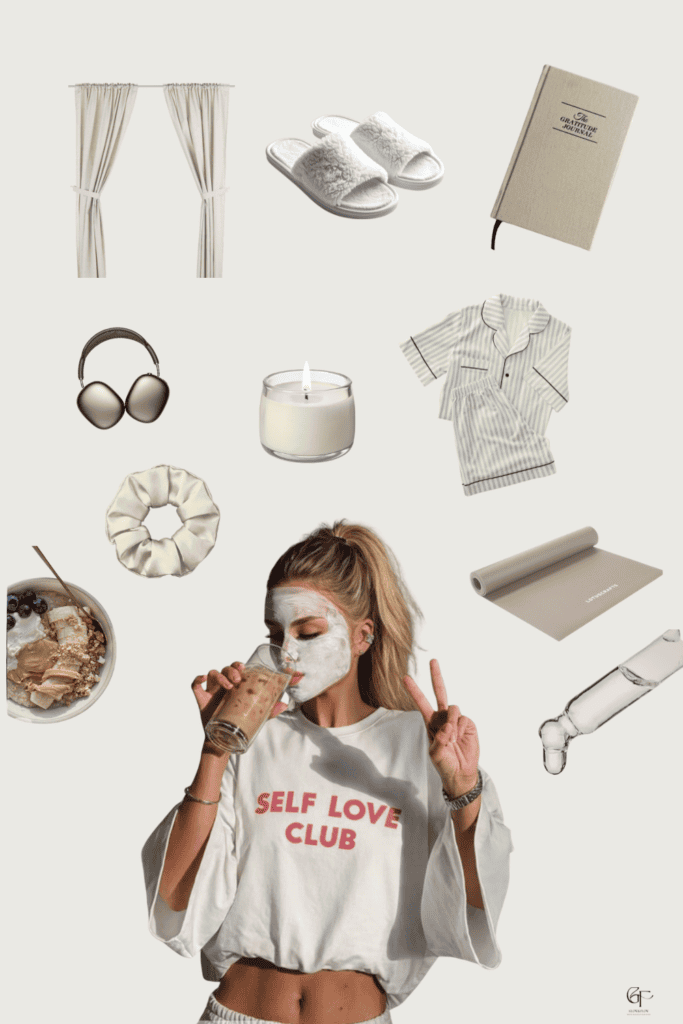
You can read more about my slow morning routine in a previous article where I share how those gentle rituals began.
Learning to Wear the Beautiful Clothes
There was a habit I used to have that I see very differently now.
I had clothes I loved — pieces that made me feel beautiful, more like myself — but I saved them almost exclusively for “real” occasions.
For going out.
For meeting people.
For the city.
Meanwhile, at home, I often wore the most worn-out, old, overly comfortable clothes, almost as if my own presence alone wasn’t reason enough for beauty.
And at some point, I found myself asking:
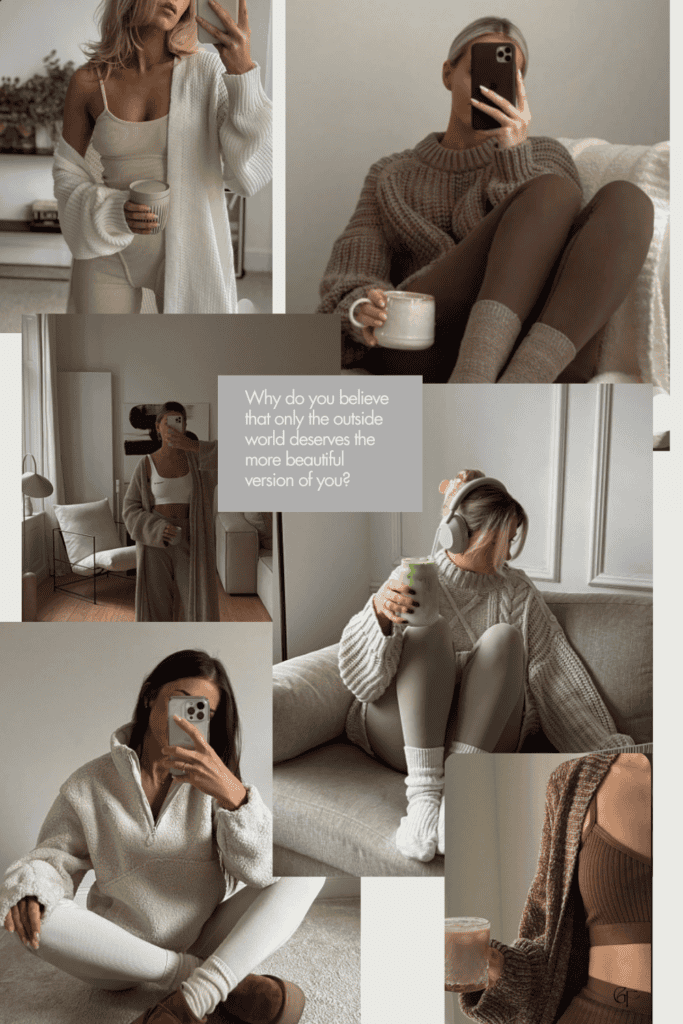
Why do I believe only the outside world deserves the more beautiful version of me?
Why am I saving these clothes for some future moment?
So I started wearing them at home too.
Soft cardigans.
Beautiful linen pieces.
Clothes that make me feel lighter, more put together, more at ease in myself.
It’s a small but powerful way of romanticizing your life — treating your own presence as worthy of beauty.
And surprisingly, it changed a lot.
Not out of vanity.
But because I realized that the way I am with myself — even when no one sees me — is part of self-love.
It carried the same logic as the “good dishes” philosophy.
Don’t save beauty.
Don’t reserve it only for special occasions.
An ordinary Tuesday afternoon at home can be enough of an occasion to feel good in your own skin.
And perhaps I, myself, am enough of an occasion for that too.
The Walk That Had No Purpose
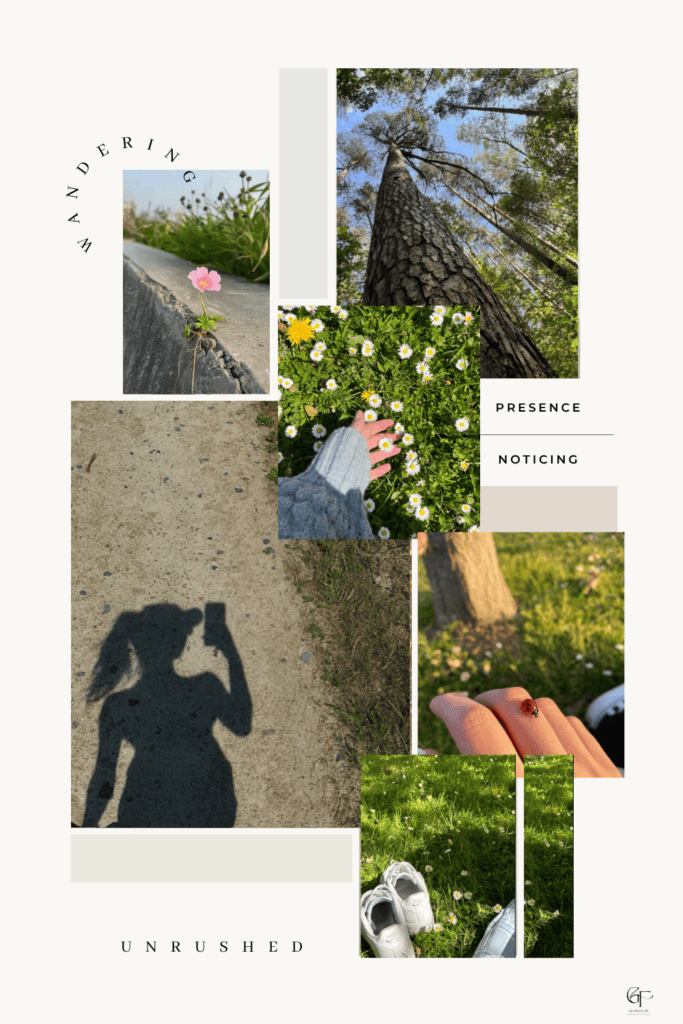
Somewhere along the way I started going on walks with no destination and no goal. Not for steps. Not to “clear my head” in a productive self-optimization way. Just to walk.
There’s a route I take sometimes in the late afternoon when the light is turning golden and the streets have that particular after-work quiet. I don’t listen to podcasts on these walks. Sometimes I don’t even listen to music. I just notice things — the way certain windows glow, the color of a door, a cat sitting very seriously on a wall.
It’s embarrassing how much this helps. How much it reorients something.
I think we’ve been so trained to treat time as a resource to be optimized that doing something with no measurable output feels almost transgressive. A walk that doesn’t count toward anything. An afternoon with no productivity attached to it. And yet these are often the moments where I feel most like myself — most present in the actual texture of my life rather than skimming above it.
There’s something unexpectedly healing about romanticizing your life through moments that don’t need to be productive.
Gratitude as Attention, Not Positivity
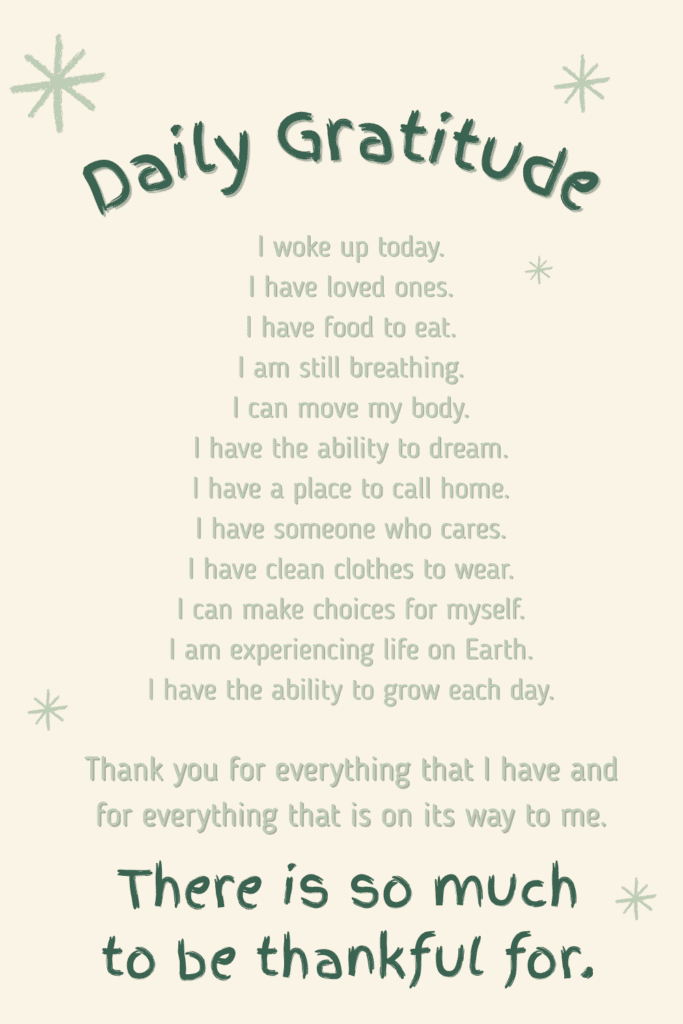
I resisted journaling for a long time because it felt like a self-help cliché. And I especially resisted gratitude journaling because it felt like forced positivity — like gaslighting yourself into pretending everything is fine.
What changed my mind was reframing it as a practice of attention rather than feeling.
I don’t write “I’m grateful for my life” in some abstract way. I write three specific things from the day: the afternoon light through the café window, a text from a friend that made me laugh, the way the first sip of tea felt when I was cold. Granular, sensory, real.
What this does — slowly, over months — is train your eye to notice as you’re living, not just in retrospect. You start catching moments mid-experience because some part of your brain knows you’ll want to remember them. It doesn’t fix anything. It doesn’t make hard days easy. But it changes what you see when you look at your days.
And when you’re in your twenties and anxiety keeps telling you that you’re behind, that you’re not enough, that your life hasn’t started yet — having evidence, in your own handwriting, that beautiful things happened today — that’s not nothing. That’s actually quite a lot.
The Solo Date That Felt Awkward and Then Didn’t
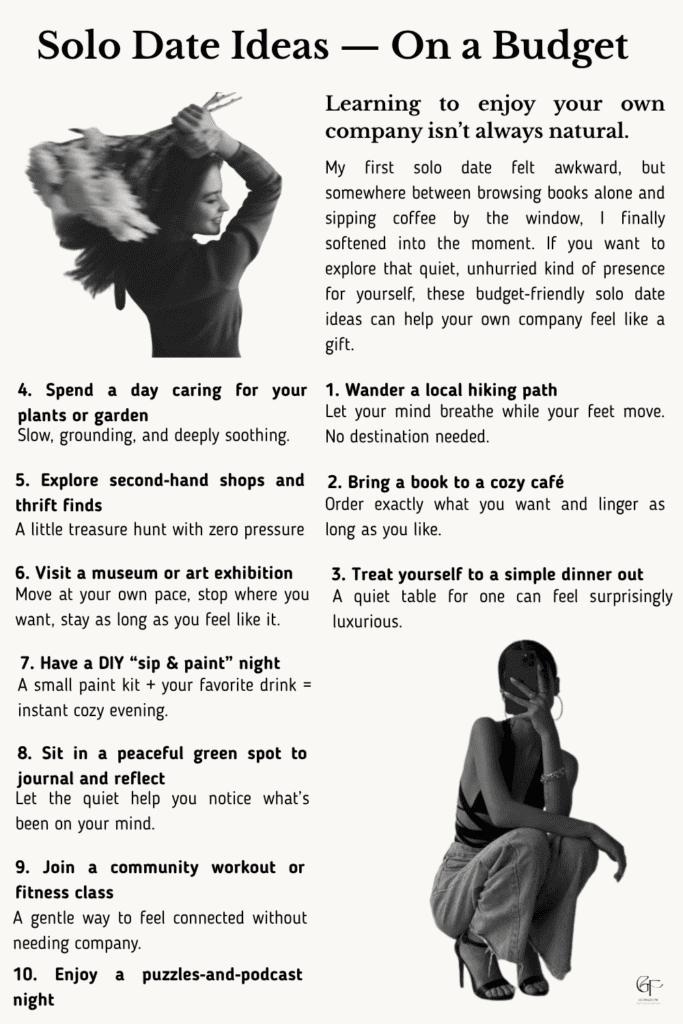
I took myself on a solo date about a year ago — to a bookshop I’d been meaning to visit, followed by coffee alone at a table by the window. I’d been wanting to do it for months and kept waiting for someone to come with me.
The first fifteen minutes were uncomfortable. I didn’t know what to do with my hands. I felt like I was waiting for someone who wasn’t coming.
And then something shifted. I started actually looking around. Reading the back of every book that caught my eye without anyone else’s patience to consider. Ordering exactly what I wanted, slowly, without negotiating. Sitting with my own thoughts in a way that wasn’t anxious — just present.
I’ve done it many times since. A museum alone. A market. A long lunch with a book. There’s a particular quality of attention that becomes available when you’re fully in your own company — not performing enjoyment for someone else, not calibrating to another person’s energy. Just you, and the experience, and however long you want to stay.
Learning that your own company is enough — genuinely enough, not a consolation prize — might be one of the most useful things I’ve done in my twenties.
A Quick List of What’s Actually Changed
- Slower mornings: Phone stays out of the bedroom. Coffee before content. Even ten minutes of quiet resets something.
- Using beautiful things daily: The good plates, the nice candle, the notebook. No more saving for a special occasion that never quite arrives.
- Intentional walks: No destination, no podcast, no goal. Just noticing.
- Three-line gratitude journal: Specific, sensory, honest. Not about positivity — about paying attention.
- Solo dates: One experience per month, alone, with full presence.
- Music as atmosphere: A playlist for cooking, for writing, for rainy afternoons. It makes the ordinary feel cinematic in a way that’s surprisingly grounding.
- Growing something: One plant on my windowsill that I water every few days. It sounds minimal. It teaches patience in a gentle, daily way.
This Isn’t Luxury. It’s a Form of Loyalty.
I want to be clear about something: none of this is about aesthetics. Or rather, the aesthetics are a side effect, not the point.
Romanticizing your life is, at its core, an act of loyalty to your present self. It’s the refusal to keep putting your own attention and care on a layaway plan — I’ll really live once I’m less anxious, once I’ve figured it out, once I’ve arrived somewhere. It’s the decision that the person you are right now, in the middle of the uncertainty and the becoming and the not-yet-knowing — deserves a beautiful Tuesday.
Your twenties are strange. There’s so much comparison, so much uncertainty, so much feeling like everyone else has a map you were never given. And it’s tempting, in that climate, to treat your current life as a rough draft. Something to push through on the way to something better.
But the rough draft is also your life. These ordinary Wednesdays are accumulating into something. And you get to decide whether you’re present for them or not.

One Last Thing
Life doesn’t become romantic when extraordinary things happen to you. It becomes romantic when you start looking at ordinary things with extraordinary attention.
That’s it. That’s the whole practice.
Start with tomorrow morning. Make the coffee slowly. Open the window. Let the day begin before you’re already halfway through a dozen other people’s lives.
Notice what happens after a week.
If this resonated with you, I’d love to know — drop a comment below and tell me one small thing you do (or want to start doing) to romanticize your everyday life. And if you want to read more on slow living and finding beauty in the ordinary, save this for later or share it with a friend who needs the reminder.
If this topic speaks to you, I highly recommend Mel Robbins’ video 13 Things I Wish I Knew in My 20s — it captures this season of life with so much honesty.