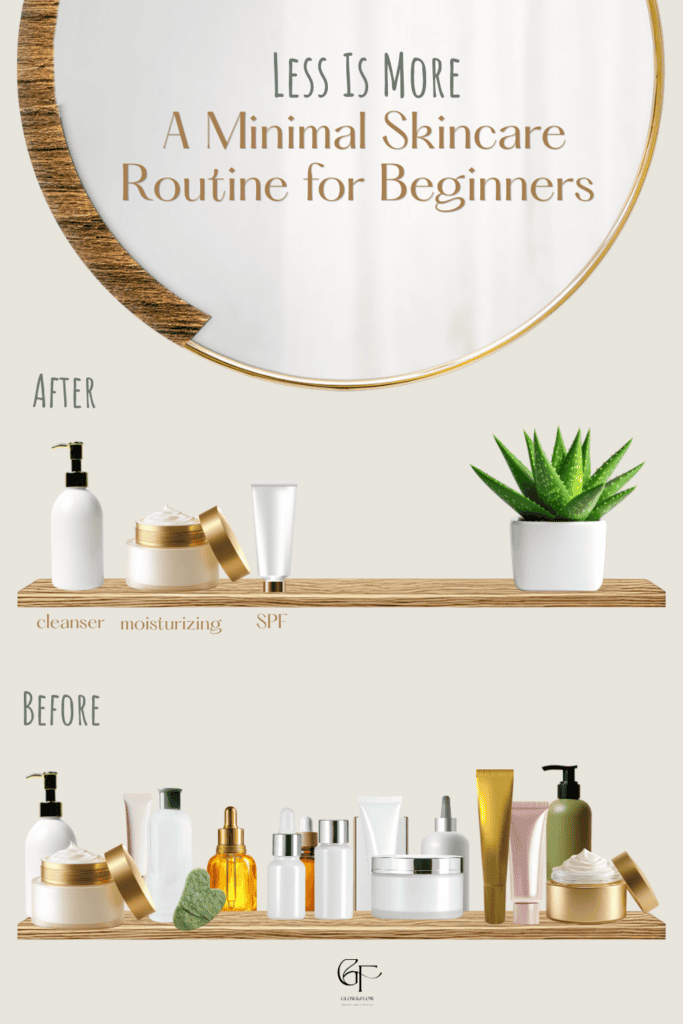
This Minimal Skincare Routine for Beginners is designed to simplify your routine and help you understand what your skin actually needs.
If you’ve ever stood in the skincare aisle of a drugstore, completely paralyzed by a wall of serums, toners, essences, and exfoliants — each one promising to transform your skin in seven days or less — then you already know how overwhelming this whole thing can get.
Most beginners don’t need more products; they need fewer, applied consistently, with a clear understanding of why each step matters. And that’s exactly what this post is going to give you.
Some links may be affiliate links which means if you choose to make a purchase, I may earn a small commission at no extra cost to you. Thanks for your support!
How I Learned That Less Is Actually More
A few years ago, my bathroom shelf looked like I was preparing for some kind of skincare emergency: vitamin C serums I’d used twice, a toner I couldn’t explain the purpose of, multiple half-empty moisturizers in different textures, and at least one sheet mask that had been sitting untouched since a YouTube rabbit hole convinced me it would “reset” my skin overnight.
My skin at the time was perpetually reactive — occasionally breaking out, often feeling tight and irritated — and I genuinely couldn’t figure out why, despite spending more money on skincare than I’d like to admit.
It wasn’t until I stripped everything back — partly out of frustration, partly because I ran out of everything at once — that my skin finally started to calm down.
Within a few weeks of using just a cleanser, a moisturizer, and sunscreen, the redness faded, the breakouts became less frequent, and my skin felt more balanced than it ever had when I was layering five products on top of each other every morning.
That experience taught me something the skincare industry would rather you not fully internalize: a consistent, minimal routine will almost always outperform an inconsistent, complicated one.
Step 1 – Cleanser: The Step That Sets Everything Else Up
The cleanser is the foundation of any skincare routine, and getting it right matters more than most people realize.
A bad cleanser doesn’t just fail to clean your skin — it actively disrupts the skin barrier that every other step depends on.
When I was using a harsh foaming cleanser that left my face feeling “squeaky clean,” I genuinely believed that tight, stripped sensation meant it was working effectively.
In reality, it was a signal that my skin had been robbed of its natural oils and moisture, leaving it vulnerable, reactive, and constantly struggling to recover.
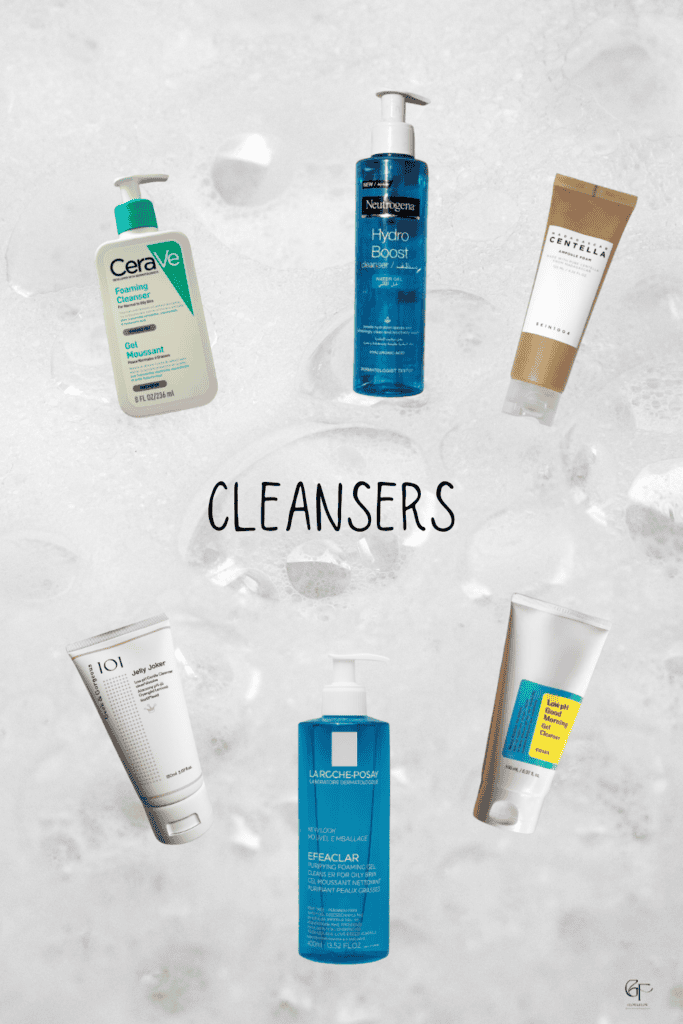
What you’re actually looking for is a gentle, low-pH cleanser — ideally fragrance-free, with a short and relatively simple ingredient list — that removes the day’s buildup without leaving your face feeling dry or uncomfortable afterward.
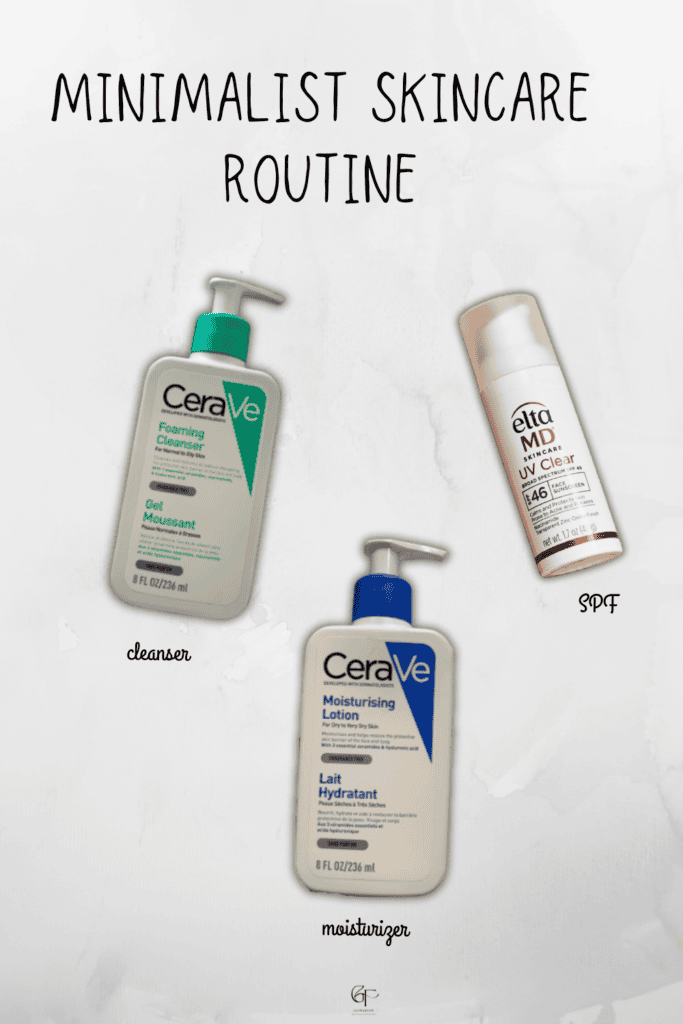
For beginners navigating the overwhelming number of options available, a few reliably excellent choices include the CeraVe Hydrating Cleanser and the La Roche Posay Effaclar Purifying Foaming Gel.
Use it morning and night with lukewarm water — not hot — and resist the urge to scrub.
Gentle, consistent application is genuinely more effective than aggressive cleansing.
For more dermatologist‑approved guidance, the American Academy of Dermatology offers an excellent international resource on skin care basics.
Step 2 – Moisturizer: The Step Everyone Thinks They Can Skip
There’s a surprisingly widespread misconception among beginners — especially those with oily skin — that moisturizer is only necessary for people with dry skin.
In fact, the opposite tends to be true: when your skin is dehydrated and stripped, it compensates by overproducing sebum.
Consistently moisturizing can actually help rebalance oil production over time, rather than making it worse, as long as you’re using the right formula for your skin type.
A moisturizer works by doing one or more of three things: drawing water into the skin using humectants, sealing that moisture in with occlusives, or strengthening the skin barrier through emollients and ceramides.
You don’t need to memorize the chemistry to find something that works for you, but understanding the basic principle helps explain why moisturizer isn’t an optional step.
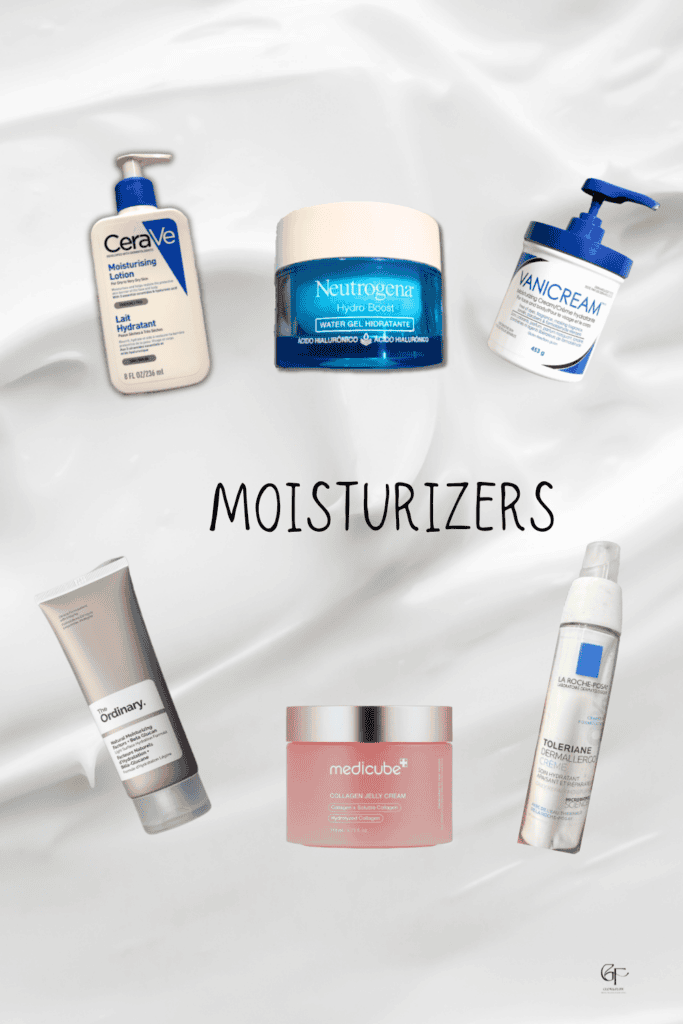
For oily or acne-prone skin types, lightweight gel moisturizers like Neutrogena Hydro Boost Water Gel work beautifully.
If your skin leans dry, or you live somewhere with a harsh winter climate, richer creams like CeraVe Moisturizing Cream or Vanicream Moisturizing Cream will feel far more satisfying.
Apply your moisturizer while your skin is still slightly damp after cleansing — it helps the product absorb more effectively.
Step 3 – SPF: The One Product That’s Actually Doing Anti-Aging Work
If you’re spending money on skincare with the goal of keeping your skin looking healthy and youthful over time, the most evidence-backed investment you can make is a daily broad-spectrum sunscreen.
UV radiation — both UVA and UVB — is the single largest contributor to premature aging, hyperpigmentation, and cumulative skin damage.
It penetrates windows, reflects off surfaces, and reaches your skin even on overcast days.
Many expensive anti-aging treatments people turn to later in life are addressing damage that daily SPF could have prevented.
Yes, sunscreen should be worn even if you work from home, even in winter, and even on days when you barely glance out a window.
Older formulas were greasy, heavy, or left a white cast, but modern sunscreens — especially Korean and Japanese ones — are lightweight and invisible.
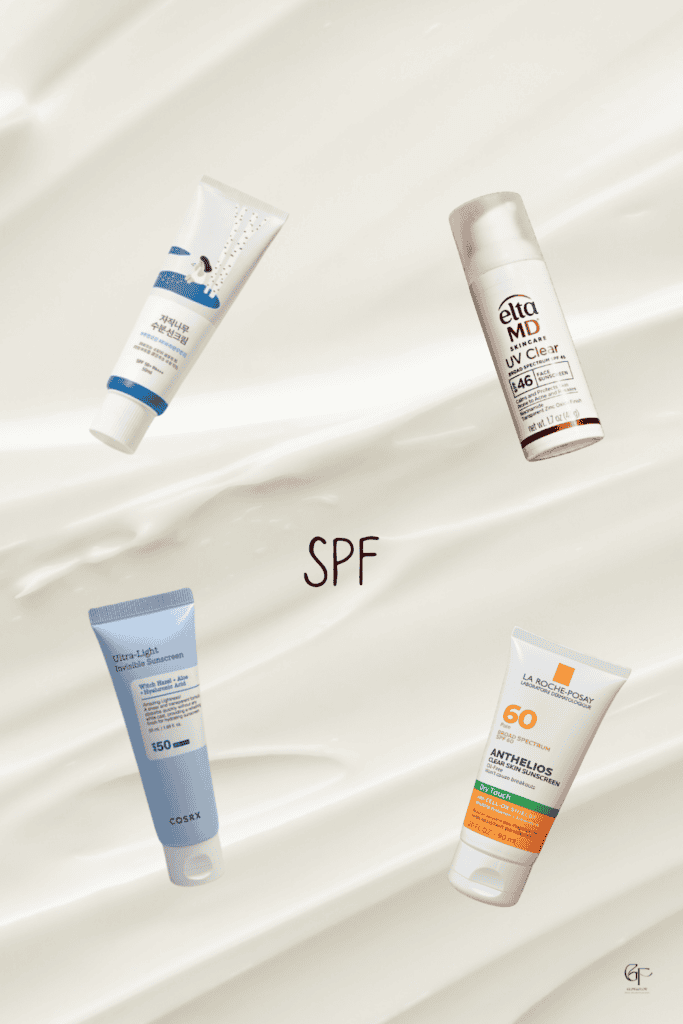
Elta MD UV Clear SPF 46, La Roche-Posay Anthelios Clear Skin SPF 60, and Round Lab Birch Juice Moisturizing Sun Cream are excellent options.
Apply SPF as the very last step in your morning routine, and treat it as non-negotiable.
What to Avoid Buying (At Least for Now)
One of the most practical pieces of advice I can offer a beginner is this: stay away from active ingredients until you’ve given your basic three-step routine at least four to six weeks to stabilize your skin.
These ingredients can be transformative, but they require a healthy, functioning skin barrier to work without causing irritation.
If you layer them in too early, you’re setting yourself up for redness, peeling, and breakouts.
I made this mistake myself when I first discovered niacinamide serums.
My skin became inflamed and took weeks to recover, which set me back further than if I’d simply waited.
The skincare industry is extraordinarily good at making you feel like you’re one serum away from perfect skin.
But your skin needs time, consistency, and simplicity far more than it needs another active ingredient.
Introduce one product at a time and commit to using it for a full four weeks before evaluating whether it’s making a meaningful difference.
Your Minimal Routine, at a Glance
Morning:
- Gentle cleanser
- Lightweight moisturizer
- SPF 30 or higher
Evening:
- Gentle cleanser
- Moisturizer (slightly richer than your morning formula if preferred)
Four to six minutes of your day, done consistently — that’s the entire routine, and that consistency is what makes all the difference.
For more beginner‑friendly guidance, you can also check CeraVe’s Tips & Advice section, where they break down skincare basics in a simple, clear way.
Final Thoughts: Embracing a Minimal Skincare Routine for Beginners
Skincare doesn’t need to be complicated or expensive to be effective.
Some of the most dramatic improvements happen when people stop adding and start subtracting.
A minimal routine built around a gentle cleanser, a well-matched moisturizer, and daily SPF will do more for your skin over the next six months than any elaborate multi-step regimen.
The most powerful thing in skincare isn’t the most potent ingredient — it’s the routine you’ll actually stick with.
If this helped you cut through some of the noise, I’d love to hear where you’re starting from.
If you found this useful, save it to your Pinterest skincare board so you can come back to it later.
If this helped you cut through some of the noise, I’d love to hear where you’re starting from — leave a comment below and tell me what your current routine looks like, or what’s been the most confusing part of getting started. If you found this useful, save it to your Pinterest skincare board so you can come back to it the next time you’re tempted by a twelve-step haul.
If you enjoyed this guide and want to keep the momentum going, you might also love my article on Glow Up Routine Before Summer — it’s a simple, uplifting routine to help you feel your best before the warm season arrives.