Why the Right Journaling Tools Actually Matter
If you’ve ever bought a beautiful notebook, written in it twice, and then let it gather dust on your nightstand, you’re not alone. It’s rarely a motivation problem. More often, it’s the wrong journaling tools for the way your brain actually works.
The right journaling tools take away the friction. They turn daily reflection from “one more thing on my to-do list” into something that feels almost automatic — a few calming minutes that help you process the day instead of just surviving it.
Below are ten journaling tools worth trying, from the simplest paper-and-pen options to a few digital ones, so you can find the mix that finally sticks.

My Own Journaling Struggle
For years, I thought I just wasn’t “a journaling person.” I’d sit down with a blank page and completely freeze — anxiety loves a blank page, it turns out. It wasn’t until I swapped my intimidating leather journal for a guided prompt book and a five-minute timer that daily reflection started to feel doable. The tools didn’t fix my anxiety, but they gave it somewhere calm to land, and that made all the difference.
1. A Guided Prompt Journal
If a blank page makes your mind go blank too, a guided prompt journal removes that pressure entirely. Every page already has a question waiting for you, so you’re never staring at empty lines wondering where to start.
This is one of the most beginner-friendly journaling tools out there, especially for anyone using journaling for anxiety support or self-discovery. Look for one with short, specific prompts rather than vague ones — “What’s one thing that felt heavy today?” is easier to answer than “Reflect on your life.”
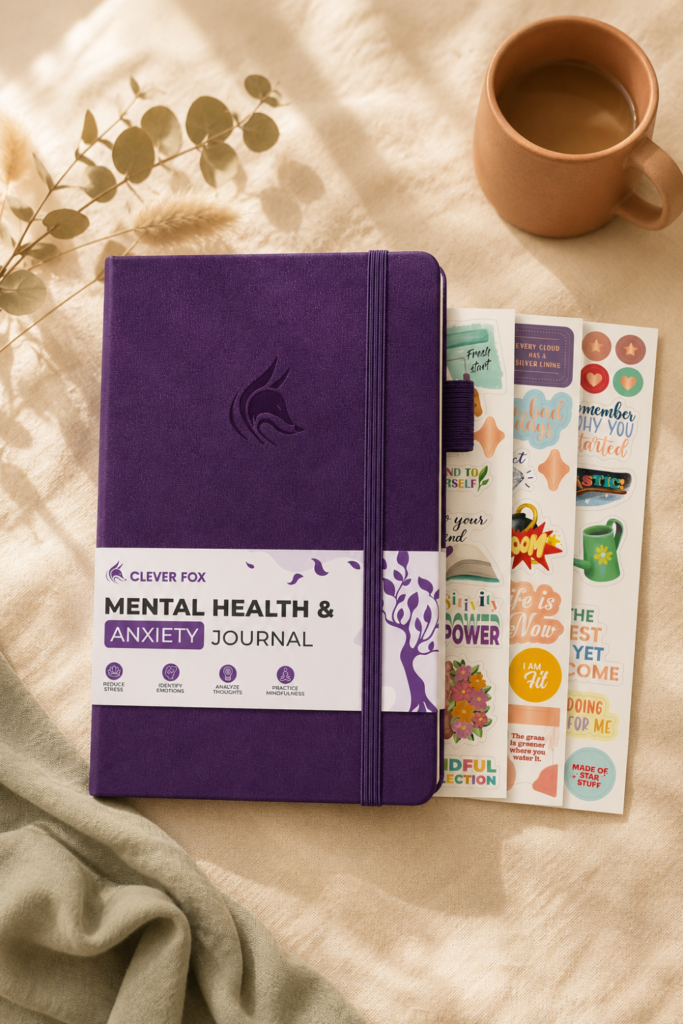
One option I keep coming back to is the Clever Fox Mental Health & Anxiety Journal — it’s built specifically around identifying emotions and practicing mindfulness, so you’re never left staring at a blank page wondering where to start.
2. A Simple Dot Grid Notebook
Not everyone wants prompts. Some people want total freedom, and a dot grid notebook is the best of both worlds: enough structure to keep your handwriting straight, without lines that make it feel like a school assignment.
Dot grid pages are also flexible for daily reflection in different formats — lists, doodles, mini habit trackers, or a simple gratitude list when you don’t have the energy for full sentences.
3. A Smart Pen That Syncs Your Handwriting
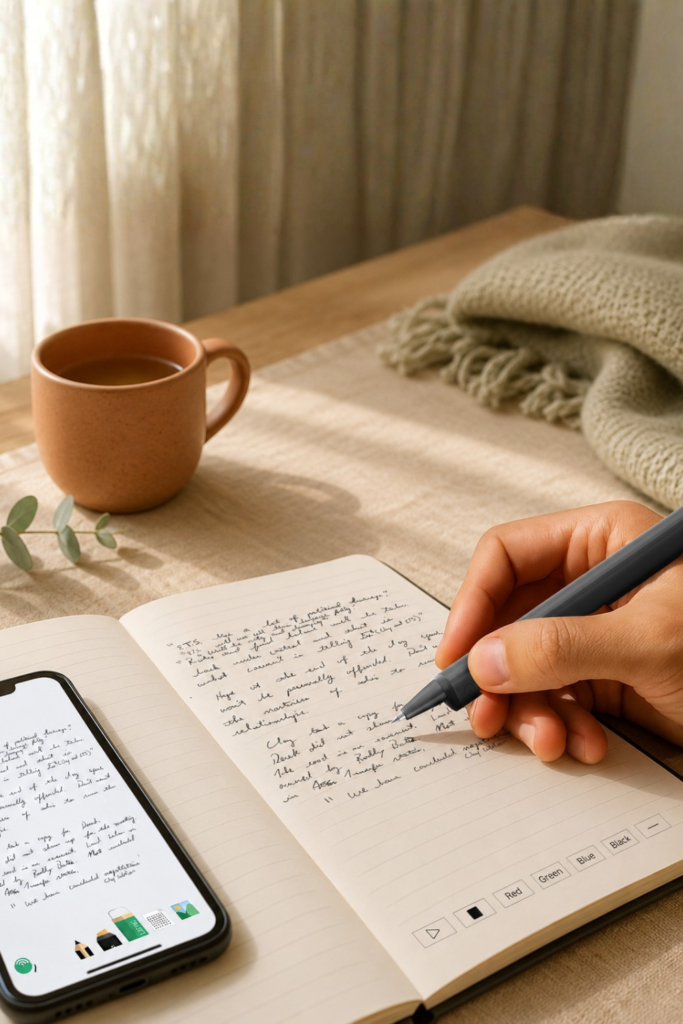
If you love the feel of writing on paper but wish your entries were easier to find and revisit later, a smart pen bridges the gap. Something like the SyncPen Digital Notebook Smart Pen Set lets you write by hand as usual, then syncs your pages to an app in real time, with OCR that turns your handwriting into searchable text.
It’s one of the more flexible journaling tools on this list, since it keeps the calm, unplugged feeling of pen and paper while still giving you a backed-up, searchable record of your daily reflection — and the built-in audio recording option is handy on days when talking things through feels easier than writing them down
Sunday Night Anxiety Reset Routine – 6 Powerful Steps That Actually Works
4. A Timer
This one sounds almost too simple to count, but a timer is genuinely one of the most underrated journaling tools for daily reflection. Setting five or ten minutes on the clock turns journaling into a small, contained task instead of an open-ended one, which makes it much less likely to feel overwhelming.
A timer also helps with the “I don’t have time” excuse — five minutes is almost always findable, even on a packed day. A visual timer is worth having on hand for this specifically, since it lets you watch the time count down without reaching for your phone — one less screen, one less temptation to get pulled into notifications right when you’re trying to unwind.
5. A “Brain Dump” Notepad
Keep a separate, low-pressure notepad just for unfiltered brain dumps — no full sentences required, no worrying about whether it “counts” as real journaling. This is especially useful before bed, when racing thoughts tend to show up uninvited.
A simple hardcover notebook, like the PAPERAGE Blank Journal Notebook, works well for this — plain pages with no prompts or structure to distract you, just somewhere to let your thoughts spill out before they keep you up at night. Keeping this one separate from your main journal takes the pressure off entirely, since it’s not meant to be reread or “kept nice.”
Getting thoughts out of your head and onto paper is one of the simplest forms of mindfulness, because it interrupts the loop of turning the same worry over and over.
6. Sticky Tabs or Stickers
Small, but genuinely useful: sticky tabs let you flag entries you’ll want to revisit, like a breakthrough moment or a pattern you noticed. A pack like ELII Sticky Index Tabs is an easy, low-cost way to start, since they’re repositionable and simple to use straight out of the box.
Stickers can make daily reflection feel a little more playful on days when it’s tempting to skip it altogether — something like Bloom Daily Planners Seasonal Sticker Sheets works well for this, adding a bit of color and variety to your pages without any pressure to use them “correctly.”
This is a small tool, but it’s part of what keeps journaling feeling like a gentle ritual instead of a chore.

7. A Mood Tracker
A mood tracker — whether it’s a printable grid, an app feature, or a simple color-coded calendar — adds a visual layer to your journaling tools. Over weeks and months, it can reveal patterns your daily entries might miss on their own, like a dip in mood around certain days or seasons.
A dedicated option like the Mood Tracker Journal combines this with guided prompts, so you’re not just logging how you feel but also gently unpacking why — helpful if you want a bit more structure than a blank grid but still want daily reflection to stay simple.
For anyone working on mental wellness, seeing those patterns in one glance can be more motivating than pages of written reflection.
8. A Pen You Actually Like Writing With
It sounds minor, but writing with a pen that glides smoothly across the page makes a bigger difference than people expect. A scratchy, uncomfortable pen is a small but real barrier between you and consistent daily reflection. Something like the Sharpie S-Gel Pens writes smoothly with almost no drag, which makes even a quick five-minute entry feel more pleasant.
If handwriting has ever felt like a chore, this is one of the cheapest journaling tools to upgrade, and one of the easiest ways to make the habit feel a little more enjoyable.
9. A Voice Recorder
Some days, writing feels like too much — and that’s okay. Talking through your day instead can feel more natural if you process thoughts better out loud than on paper. Your phone’s voice memo app works fine for this in a pinch, but if screens tend to pull you into notifications and scrolling the moment you pick one up, that convenience can quietly work against the calm you’re trying to create.
That’s where a dedicated device like the EVISTR 64GB Digital Voice Recorder comes in. It does one thing — record and play back your voice — with no lock screen, no apps, and nothing to distract you before or after you talk things through. For anyone using journaling as part of a wind-down routine, keeping that boundary between “reflection time” and “phone time” can make the habit feel more restful, not less.
This is a good backup option to keep in your journaling toolkit for exhausted days when reflection still matters, but a full written entry doesn’t feel possible.
10. A Journaling Jar or Prompt Cards
A jar filled with prompt cards adds a small sense of ritual to journaling — pull one card, answer it, done. It’s a nice option for slower weekends, or for anyone who wants their journaling tools to feel a little more tactile and intentional than typing on a screen.
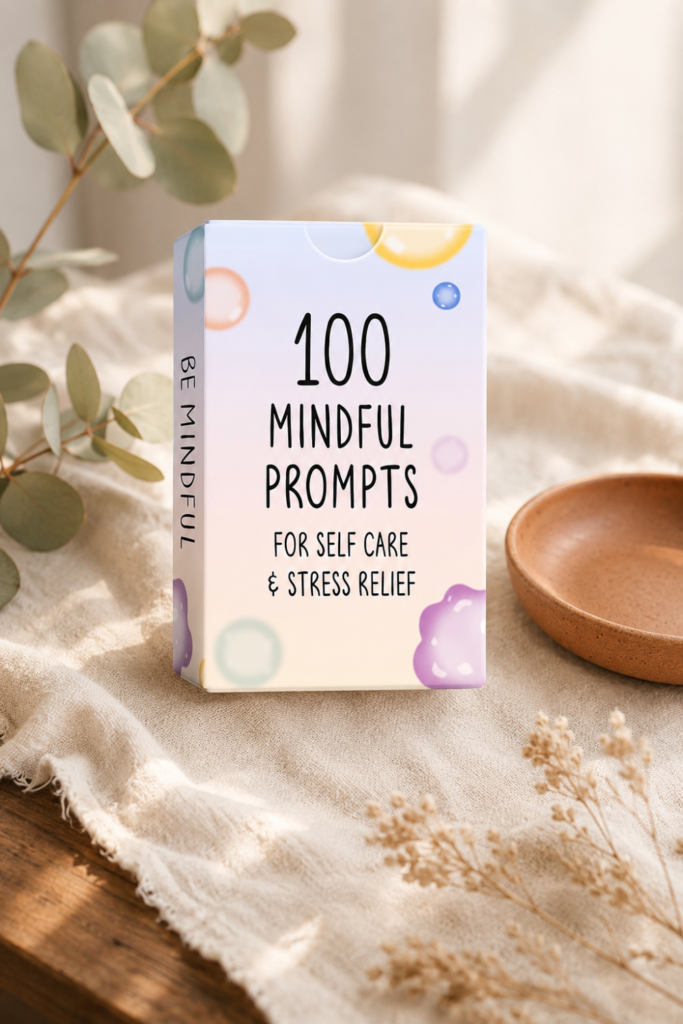
A deck like the 100 Mindful Prompts for Self Care & Stress Relief cards is an easy way to start — each card offers a gentle, ready-made prompt designed to reduce anxiety and encourage relaxation, so there’s zero guesswork involved.
Quick Recap: Journaling Tools at a Glance
- Guided prompt journal — removes blank-page pressure
- Dot grid notebook — flexible, freeform structure
- Digital journaling app — convenient and searchable
- Timer — keeps daily reflection short and doable
- Brain dump notepad — low-pressure, no rules
- Sticky tabs or stickers — flags meaningful entries
- Mood tracker — reveals patterns over time
- A pen you enjoy — removes small friction
- Voice memo app — a backup for low-energy days
- Journaling jar or prompt cards — adds a sense of ritual
FAQ
What tools do I need to start journaling? At the most basic level, all you need is a notebook and a pen, or a notes app on your phone. Guided prompt journals and timers can make it easier to stay consistent, but they’re optional additions, not requirements.
What is the best journaling method for beginners? For beginners, a guided prompt journal paired with a short timer tends to work best, since it removes the two biggest obstacles: not knowing what to write and feeling like it has to take a long time.
Can journaling really help with anxiety? Research on expressive writing, including work summarized by the American Psychological Association, has found that regularly writing about thoughts and feelings can reduce stress and improve emotional processing over time. It’s not a replacement for professional support, but it can be a helpful daily practice.
Do I need a special journal to start journaling? No. A plain notebook works perfectly well. The “special” tools on this list are meant to reduce friction and add structure, not to gatekeep who gets to call themselves a journaler.
How do I choose the right journaling tools for me? Think about where you get stuck. If a blank page overwhelms you, start with prompts. If you forget to journal, start with a timer or app reminder. If you dislike writing altogether, a voice memo app might suit you better.
Final Thoughts
Daily reflection doesn’t need to be complicated, and it definitely doesn’t need to look like anyone else’s aesthetic notebook flat-lay. The right journaling tools are simply the ones that make it easier for you to sit down, even on the days you don’t feel like it. Start with one or two from this list, not all ten, and let the habit build from there.
According to Mayo Clinic, keeping a regular journal is one of several simple habits associated with better stress management and overall mental wellness — one more reason it’s worth finding tools that make the habit stick.
Your Turn
Which journaling tool are you going to try first? Save this post to Pinterest so you can come back to it, and drop a comment below with the tool that’s worked best for you.
If you’re not sure where to start with journaling, read my earlier article 30 Powerful Journaling Prompts for Self-Discovery for guidance and inspiration.
This article contains affiliate links. If you choose to make a purchase through them, I may earn a small commission at no extra cost to you. Thank you for supporting my work and helping me create more mindful, helpful content.