The real causes of anxiety often reveal themselves in the most unexpected ways. If you’ve ever woken up with a racing heart for no clear reason, or felt a wave of dread wash over you on an ordinary Tuesday afternoon, you already know that anxiety doesn’t always knock politely. Sometimes it shows up uninvited, right in the middle of an otherwise calm day. And the strangest part? These causes of anxiety often hide in places we’d never think to look — not in the big, obvious stressful events, but in the quiet, everyday corners of our lives that we’ve long stopped questioning.

Why Are So Many of Us Struggling With Anxiety Today?
It’s not your imagination — anxiety really has become more common, and it isn’t just a matter of people talking about it more openly. According to the American Psychological Association, reported anxiety levels have climbed steadily over the past decade, especially among younger adults. We’re living in a world of constant notifications, blurred work-life boundaries, economic uncertainty, and a 24/7 news cycle that never lets our nervous systems fully power down.
Add to that the slow erosion of close-knit communities, the pressure of comparing our lives to curated highlight reels online, and the loss of slow, unstructured downtime, and you get a generation whose bodies are stuck in a low simmer of “alert mode” almost all day, every day. Our brains evolved to handle occasional, short bursts of danger — not endless, low-grade stimulation that never fully switches off. That mismatch between how we’re wired and how we’re actually living is a huge piece of why so many of the causes of anxiety we’ll talk about today fly completely under the radar.
My Own Story With Anxiety
I’ve lived with generalized anxiety for years, and social anxiety has been with me even longer — long before I had the words to describe what was happening in my body. For a long time, I thought anxiety was simply part of my personality, not something with real roots or patterns I could understand.
Everything shifted when I started paying attention to my own habits — my sleep, my eating, the way I scrolled my phone before bed — and when I realized how many friends were struggling with the same things. That’s when it became clear that most causes of anxiety aren’t about willpower or “thinking positive.” They’re physical, environmental, and emotional factors that almost everyone overlooks, even people who seem very self-aware.
That’s why I wrote this article: to walk you through seven of the most surprising, most ignored causes of anxiety, and to offer simple, practical ways to start addressing each one — no perfection needed, just small, doable shifts.

1. Chronic, Low-Grade Inflammation
One of the most overlooked causes of anxiety is chronic gut inflammation. Your gut and brain are in constant communication through the gut–brain axis, and ongoing inflammation — from diet, stress, gut imbalances, or food sensitivities — can directly affect mood‑regulating neurotransmitters like serotonin, most of which is produced in the gut.
This means even something as simple as sluggish digestion or several inflammatory meals can leave you feeling jittery or unsettled without a clear reason.
How to approach it: Pay attention to how your body feels after meals — bloating, fatigue, or brain fog can be meaningful clues. Adding more fiber, fermented foods, and reducing ultra‑processed snacks for a couple of weeks is a gentle experiment many people find genuinely helpful.
2. Blood Sugar Rollercoasters
Skipping meals or relying on caffeine and sugar sends your blood sugar on a rollercoaster — and the crash that follows can mimic a panic attack: shakiness, a racing heart, irritability, and a sudden sense of dread that seems to come out of nowhere. It’s sneaky because it’s purely physiological, yet it often gets mistaken for “random” anxiety.
How to approach it: Pair carbs with protein or healthy fat at each meal, and try not to go more than four to five hours without eating something substantial. For many people, this simple shift noticeably reduces those unexplained spikes of anxiety throughout the day.

3. Accumulated Sleep Debt
One bad night of sleep is manageable, but weeks of slightly too little rest quietly build into sleep debt — one of the most underestimated drivers of anxiety. Harvard Health notes that poor sleep and anxiety reinforce each other: anxiety disrupts sleep, and sleep deprivation heightens anxiety the next day, creating a loop that’s hard to break.
Because sleep debt accumulates slowly, most people don’t notice it happening; they just feel a bit more on edge each week without realizing why.
How to approach it: don’t chase a “perfect” night. Focus on consistency — waking up at the same time every day, weekends included. This steadies your circadian rhythm far more effectively than catch‑up sleep and, over a few weeks, often softens that constant background anxiety.
4. Digital Overload and Doomscrolling
Our nervous systems were never designed to process this much information, this fast, all day long. Constant notifications, comparison on social media, and endless scrolling through distressing news keep our stress hormones, particularly cortisol, elevated almost permanently — long after we’ve put the phone down.
Even seemingly neutral scrolling trains your brain to expect a constant stream of new, urgent information, which makes it harder and harder to settle into genuine rest.
How to approach it: Try a “soft digital curfew” — no phone in the hour before bed, and one specific time block during the day for checking news or social media, instead of grazing on it constantly throughout the day. Even this one small boundary tends to lower that background hum of unease within just a week or two.

5. Suppressed Childhood Emotions
This one is especially close to me. Many of us grew up learning to suppress emotions that felt “too much” — sadness, anger, fear — simply because they weren’t welcomed or understood at home. Those unprocessed feelings don’t vanish; they go underground and often reappear later as anxiety, especially during stress or major life changes.
What makes this so easy to miss is that the anxiety it creates doesn’t feel like “old emotions” returning — it just feels like a constant sense of being on edge or not fully safe.
How to approach it: Reparenting work — offering your younger self the validation it never received — can be deeply healing. Journaling about specific childhood moments and naming the emotions you weren’t allowed to express back then is often the first real step toward easing anxiety in the present.
6. Hormonal and Thyroid Imbalances
Anxiety isn’t always purely psychological. Thyroid dysfunction, fluctuating cortisol levels, and hormonal shifts (during PMS, perimenopause, postpartum, and beyond) can all mimic or significantly intensify anxiety symptoms, sometimes regardless of how calm someone’s life circumstances actually are. The National Institute of Mental Health notes that anxiety disorders often have biological as well as environmental roots, which is exactly why a purely “mindset” approach sometimes doesn’t fully resolve things, no matter how hard someone tries.
How to approach it: If your anxiety feels disproportionate to your actual circumstances, or comes paired with symptoms like unexplained weight changes, persistent fatigue, or irregular cycles, it’s worth asking your doctor for a basic hormone and thyroid panel. This single step alone has been a genuine turning point for many people who had spent years assuming their anxiety was “just stress.”
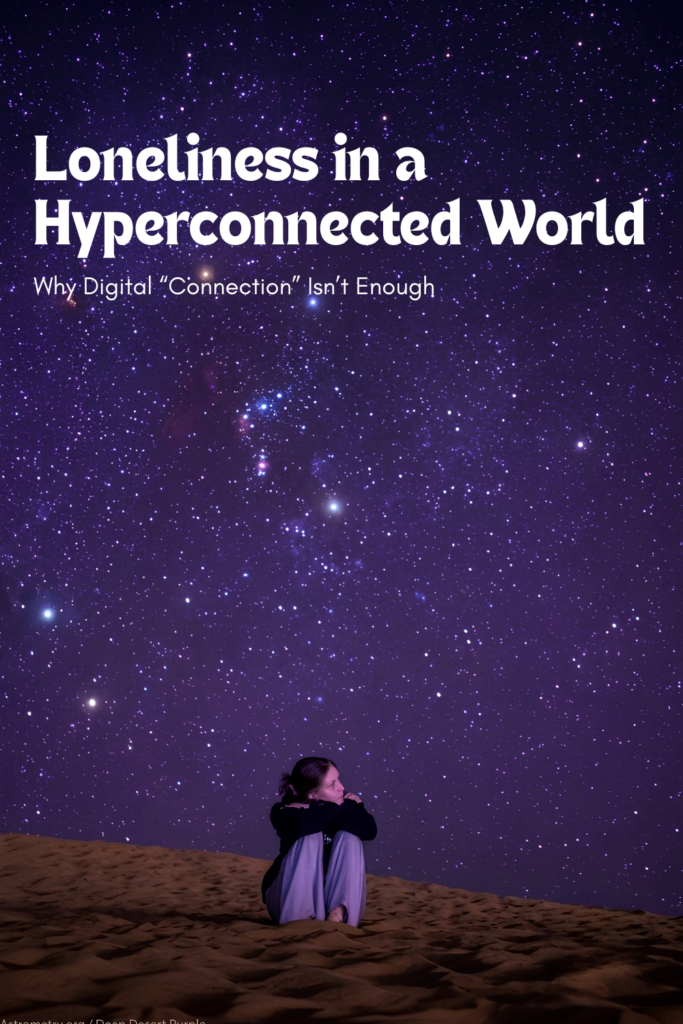
7. Loneliness in a Hyperconnected World
We have more ways to “connect” than ever, yet loneliness keeps rising. Quick digital interactions — likes, comments, half‑distracted group chats — don’t meet our deep need for real connection, and that gap quietly fuels everyday anxiety.
It’s a strange paradox: you can be constantly in touch with dozens of people and still feel profoundly alone, and that disconnect becomes one more thing your nervous system quietly reacts to.
How to approach it: Choose one real, unhurried conversation a week instead of dozens of shallow digital ones. Quality matters far more than quantity, and even a single meaningful exchange can noticeably shift how supported and grounded you feel.
Quick Recap: 7 Causes of Anxiety at a Glance
- Chronic inflammation — gut health quietly shapes mood through the gut-brain axis
- Blood sugar swings — skipped meals and sugar crashes can mimic panic symptoms
- Sleep debt — small, repeated sleep loss adds up into major anxiety fuel
- Digital overload — constant notifications and doomscrolling keep stress hormones high
- Suppressed childhood emotions — unprocessed feelings resurface as adult anxiety
- Hormonal imbalances — thyroid and cortisol issues can intensify or mimic anxiety
- Loneliness — shallow digital connection doesn’t meet our real need for closeness
Final Thoughts
If there’s one thing I hope you take from this article, it’s that anxiety is rarely just “in your head.” The real causes of anxiety are almost always layered — part biology, part environment, part unhealed emotional history — and that’s actually good news, because it means there are far more entry points for healing than most of us give ourselves credit for. You don’t have to fix everything at once, and you definitely don’t have to overhaul your entire life this week.
Pick just one of these seven areas that resonated with you the most, and start there. Small, consistent shifts in the right direction tend to add up far more than we expect, especially once we stop blaming ourselves for something that was never really about willpower in the first place.
Your Turn
Which of these overlooked causes of anxiety resonated with you most? Feel free to share it in the comments — naming what you’re working through is often the first step toward feeling less alone. And if this piece gave you a new perspective on your anxiety, save it on Pinterest or subscribe so you won’t miss future articles on healing and inner child work.
If you’d like to explore this further, you can read my previous article on a related topic 8 Science-Backed Anxiety Relief Methods Therapists Actually Use.